Grass-Fed Tallow for Skin: Benefits, Uses & Why It Works

Long before a single jar of cream sat on a shelf, people rubbed rendered animal fat into wind-burned, sun-worn skin. Pastoral cultures across Eurasia and Africa relied on tallow and butterfat as everyday skin protectants, and in Europe, fat-based salves were the household standard well into the nineteenth century. That persistence wasn’t superstition, it was practical knowledge, refined across generations, about which substances kept skin supple and intact. Modern lipid science now gives us the vocabulary to explain why fat worked, and, just as usefully, where the old wisdom needs qualifying. Read more about “Skin Lipid” here.
What Is Grass-Fed Tallow?
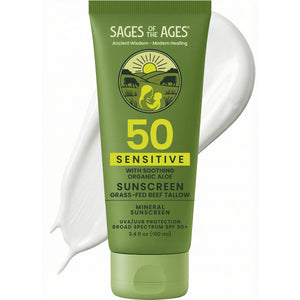
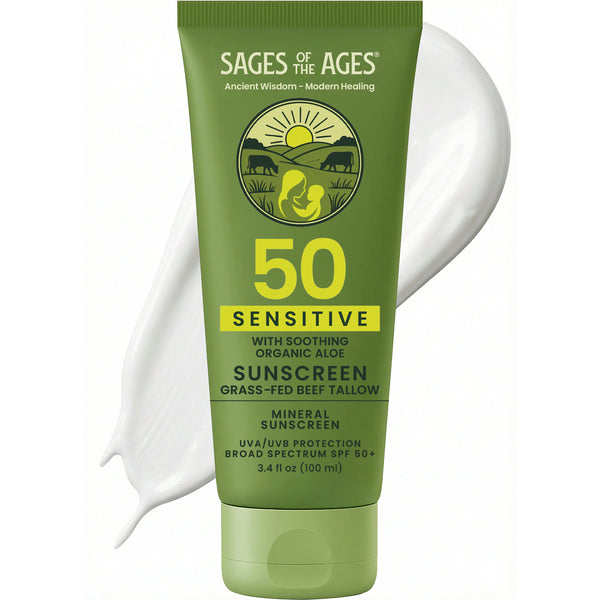
Tallow is simply rendered beef or mutton fat. What makes the grass-fed version distinct is its raw material: cattle raised on pasture tend to produce fat with a more favourable fatty-acid balance and higher levels of fat-soluble vitamins (A, D, E and K) than grain-finished animals. Chemically, tallow is dominated by oleic, palmitic and stearic acids the same families of fatty acids your own skin produces.
Why Beef Tallow Moisturizer Works So Well
The popular pitch is that tallow matches the oils your skin already makes. There is real biology behind that. Human sebum is a blend of triglycerides, wax esters, and squalene, and the skin’s surface genuinely contains the same fatty-acid families found in tallow. But the part of your skin that does the hard work, the barrier that holds water in and irritants out, is built from a specific matrix of ceramides, cholesterol, and free fatty acids, not triglycerides. Tallow can supplement surface oils and sit comfortably on skin that recognises its components, yet it supplies none of the ceramides that define the barrier. “Biocompatible,” then, is fair. “Identical to your skin” is not.
The Fat-Soluble Vitamins in Tallow: What the Science Says
Tallow’s most-hyped asset is its vitamin A. The science linking vitamin A to skin is genuinely strong but it concerns concentrated retinol and retinoids. In a landmark study of naturally aged skin, topical vitamin A raised fibroblast activity and collagen production while lowering the enzymes that break collagen down; later work confirmed that retinol increases type I and III collagen and visibly softens wrinkles. The honest caveat: those results come from purified retinol at cosmetic doses, not from the comparatively small amount of naturally occurring vitamin A in a fat. It is accurate to say tallow contains skin-relevant vitamins; it is not established that it delivers a retinol-like effect. Treat that as a promising idea, not a proven mechanism.
Fair Objections to Tallow Skincare
-
The grease and “clogging” question. Research shows that free oleic acid can disorder the skin’s lipid layers and raise water loss after even a single application, whereas the same fatty acid bound inside a triglyceride does not. Most of tallow’s oleic acid is bound in triglycerides, but very oily or acne-prone skin may still dislike heavy occlusives. Patch-test first.
-
Smell and texture. Rendered fat has a scent and a heavier feel than a water-based lotion. Not everyone enjoys it, and that is a legitimate reason to choose otherwise.
-
Comedogenicity ratings are contested. They vary by individual and testing method; “non-comedogenic” is never a guarantee for every skin type. Naming these trade-offs isn’t a weakness in the case for tallow. It is how you work out whether tallow is right for your skin specifically.
What to Watch For When You Start
Rather than promising a week-by-week transformation, here is what is actually happening if you try tallow. The first thing most people notice less tightness and flaking within a week or two is an occlusive effect: the fat slows water loss from the outermost layer. That is comfort and hydration, not a structural change. Any genuine shift in firmness or fine lines, if it happens, runs on the skin’s much slower renewal cycle, measured in months, because collagen remodelling is inherently slow. Knowing which is which keeps your expectations honest.
The Bottom Line
Tallow is a simple, single-ingredient occlusive emollient with a long human track record and a plausible nutrient bonus. It is not a drug, not a retinoid, and not a clinical barrier-repair therapy. If that framing appeals to you, we’ve tried to build our formulations around the same principles: minimal ingredients, grass-fed sourcing, honest labelling at sagesnutrition.