Shilajit in Ayurveda: History, What's Inside & How to Take It

Shilajit has been part of Ayurvedic tradition for centuries. Here's what it is, what's actually in it, how people traditionally take it, and how to tell a quality resin from a questionable one.
Shilajit is one of the oldest ingredients in Ayurveda, the traditional system of wellness from the Indian subcontinent. It's been described in Ayurvedic texts for centuries, and it's still taken the traditional way today: a small amount of resin dissolved in something warm. Here's a plain-English look at what it is, what's inside it, and how to choose a good one.
What Is Shilajit?
Shilajit, sometimes called mineral pitch, is a dark, sticky resin that seeps from rock in high mountain ranges, most famously the Himalayas. It forms very slowly, over centuries, as plant matter breaks down and mixes with minerals trapped in the rock. When it's collected and purified, the result is a thick, glossy, tar-like resin with a strong earthy smell and taste.
How Ayurveda Has Used It
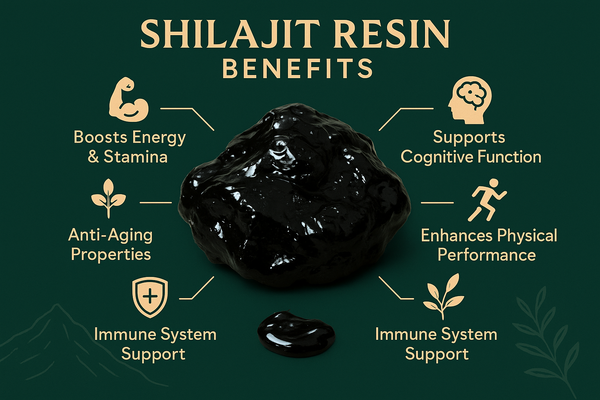
In Ayurveda, shilajit is traditionally classed as a rasayana, a category of substances taken regularly to support overall vitality and healthy aging.* It was customarily taken in small amounts, often mixed with warm milk, water or honey, and frequently combined with other herbs as part of a daily routine rather than as a quick fix.
What's Actually Inside
Shilajit's makeup varies by source, but quality resin is known for:
- Fulvic acid: the compound shilajit is most prized for, and the main number to look for on a lab report.
- Humic acid: a related organic compound formed from decomposed plant matter.
- Dibenzo-alpha-pyrones: naturally occurring organic compounds found in shilajit.
- Trace minerals: small amounts of naturally occurring minerals from the surrounding rock.
How to Take It
The traditional form is the resin itself. Take a pea-sized portion (about 250 mg) once a day, dissolved in warm, not boiling, water, tea or milk. It has a strong, earthy, slightly bitter taste that some people take a while to get used to. If the resin feels hard, that's normal. Real shilajit firms up when cool and softens when warm.
If the taste isn't for you, gummies are an easier option. Look for a standardized amount of shilajit per serving so you know exactly what you're getting.
How to Choose a Quality Shilajit
Because shilajit comes out of rock, testing matters more than almost anything else. Before you buy, look for:
- A third-party lab report (certificate of analysis) from an accredited lab.
- Heavy metal results for lead, cadmium, mercury and arsenic, all passing.
- A stated fulvic acid percentage. Higher, verified numbers indicate a more concentrated resin.
- No fillers or additives in the resin itself.
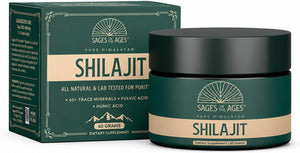
Our Pure Himalayan Shilajit Resin is tested by Eurofins, an ISO 17025-accredited lab. Our certificate shows 60.03% fulvic acid and passing results for lead, cadmium, mercury and arsenic. Prefer an easier format? Try our Shilajit Gummies, with 1500 mg of shilajit resin per serving.
A Note on Safety
Talk to your healthcare professional before adding shilajit to your routine if you're pregnant, nursing, taking medication, or have a medical condition.
*These statements have not been evaluated by the Food and Drug Administration. This product is not intended to diagnose, treat, cure, or prevent any disease.