Shilajit and Ashwagandha: What to Know Before You Stack Them

Why people pair shilajit and ashwagandha, what research has looked at for each one, where the evidence is still thin, and how to choose tested products.
Shilajit and ashwagandha are two of Ayurveda's best-known ingredients, and today they're often taken together as a daily “stack.” Here's what each one is, what research has looked at, where the evidence is still thin, and what to consider if you want to try them.
What Is Shilajit?
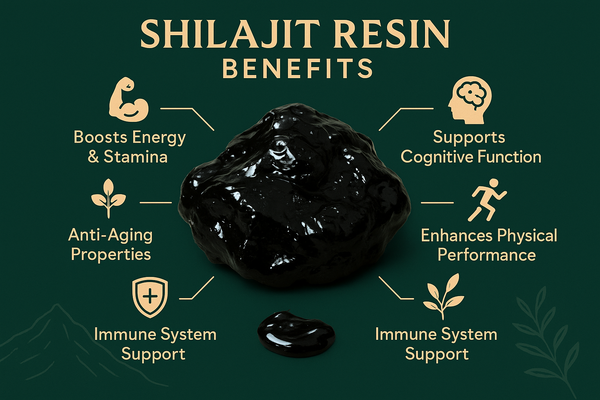
Shilajit is a dark, tar-like resin that forms slowly in high mountain rock as plant matter breaks down over centuries. It has been used in Ayurveda for generations as a daily tonic for vitality.* Its best-known compound is fulvic acid, which is the main quality marker researchers and labs measure.
What Is Ashwagandha?
Ashwagandha (Withania somnifera) is an herb traditionally classed as an adaptogen, meaning it's used to help the body handle everyday stress.* It's one of the most studied herbal supplements, and standardized root extracts such as KSM-66 have been used in several randomized, placebo-controlled trials.
Why People Take Them Together
The idea behind the pairing is simple: ashwagandha is traditionally used for stress and relaxation, while shilajit is traditionally used for energy and vitality. Many people like the idea of covering both in one routine.* It's worth knowing, though, that the combination itself hasn't been studied in clinical trials. The research below looks at each ingredient on its own.
What the Research Has Looked At
Ashwagandha and everyday stress
Several small randomized trials have found that adults taking standardized ashwagandha root extract reported lower stress scores than those taking a placebo, and some also measured lower cortisol. This is the strongest body of research for either ingredient, though the studies are still modest in size and length.*
Shilajit and exercise
A 2019 study in the Journal of the International Society of Sports Nutrition found that recreationally active men taking 500 mg of shilajit daily for 8 weeks retained more muscle strength after a fatiguing exercise protocol than those on placebo.*
Hormone studies in healthy men
Both ingredients have been studied for their effect on hormone levels in healthy men, in small trials. A 2016 study in Andrologia reported higher testosterone levels in healthy men aged 45–55 after 90 days of purified shilajit, compared with placebo. These are early, small studies, and hormone levels depend on many factors, so they shouldn't be read as a promise for any individual.
Gummies vs. Resin vs. Capsules
The best format is the one you'll actually take consistently. Whatever you choose, look for:
- A stated amount per serving, not a vague “proprietary blend”
- Standardized extracts (for example, a stated fulvic acid percentage for shilajit, or KSM-66 for ashwagandha)
- Little or no added sugar
- Third-party testing, with a certificate of analysis you can actually see
What Sages Offers
We currently offer shilajit on its own, in two forms:
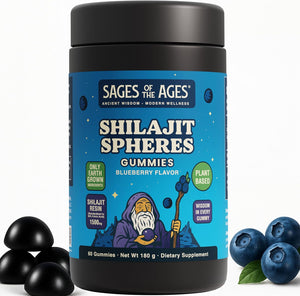
- Shilajit Gummies: 1500 mg of shilajit resin per serving, standardized to 50% fulvic acid, zero sugar and plant-based.
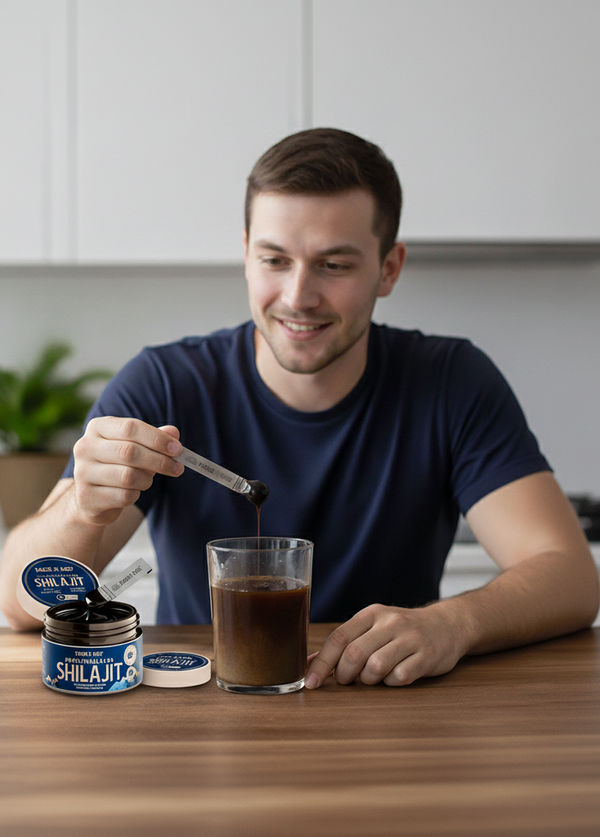
- Pure Himalayan Shilajit Resin: single-ingredient resin, lab tested by Eurofins.
If you'd like to add ashwagandha, choose a standardized extract from a brand that publishes its testing, and take the two as separate supplements so you can adjust each one.
Safety First
Talk to your healthcare professional before combining supplements, especially if you're pregnant or nursing, take medication (including thyroid, blood pressure, blood sugar or sedative medications), or have a medical condition. Ashwagandha isn't recommended during pregnancy.
The Bottom Line
Shilajit and ashwagandha each have a long traditional history and some promising early research, with ashwagandha's stress research the most developed. The combination is popular, but it hasn't been studied as a pair. If you try it, choose tested products, start with the label dose, and pay attention to how you feel.
*These statements have not been evaluated by the Food and Drug Administration. This product is not intended to diagnose, treat, cure, or prevent any disease. This article is for educational purposes and is not medical advice.