Non-Nano Zinc Oxide vs Nano vs Chemical Sunscreen: What's Safer?

Mineral vs chemical sunscreen, and nano vs non-nano zinc oxide: what the studies actually show, whether non-nano zinc is safe, and how to choose without the scare tactics.
Sunscreen is one of the few skincare choices backed by hard clinical data, which makes it strange that the mineral-versus-chemical debate is so often argued with more heat than evidence. Here is what the studies genuinely establish, where the popular claims overreach, and how to choose without scaring yourself.
The Basics: How Each Type Works
Organic (“chemical”) filters such as oxybenzone, avobenzone and octinoxate mainly absorb UV radiation and release it as heat. The mineral filters, zinc oxide and titanium dioxide, sit largely at the surface, where they reflect, scatter and absorb UV. Zinc oxide is broad-spectrum, covering both UVA and UVB.
Does Chemical Sunscreen Get Absorbed? What the Studies Found
In two FDA-run randomized trials, several organic filters were absorbed into the bloodstream above the agency's 0.5 ng/mL threshold after a single day of use, and lingered for days afterward. The context matters, though. That threshold is simply the level above which the FDA asks for more safety data. It is not a level shown to cause harm, and the same researchers explicitly urged people to keep using sunscreen. So the accurate statement is “these ingredients are absorbed and haven't been fully studied at those exposures,” not “they are proven toxic.”
Why Non-Nano Zinc Oxide Is the Conservative Choice
Under the FDA's current rulemaking, only zinc oxide and titanium dioxide are proposed as “generally recognized as safe and effective.” The common organic filters still need more data. That regulatory difference, not fear of “chemicals,” is the strongest practical argument for choosing minerals. Add to it photostability (avobenzone can degrade within hours of sun exposure, while zinc oxide stays stable) and a gentle profile that dermatologists routinely recommend for reactive, post-procedure and children's skin.
What About Nano vs Non-Nano Zinc?
A common claim is that nano-sized zinc penetrates into the bloodstream like an organic filter. The human evidence actually points the other way: studies find that zinc oxide nanoparticles largely remain in the outer layer of skin and do not pass into living tissue. The honest case for non-nano is therefore less “nano is dangerous” and more “larger particles are the most conservative choice, leave no penetration question open, and have a long track record.”
Reef and Environmental Impact
In laboratory studies, oxybenzone is toxic to coral larvae, driving bleaching, DNA damage and developmental deformities, and it is now restricted in places such as Hawaii, Palau and Key West. Zinc oxide carries no such restrictions, which is why it's the default choice for reef-conscious travelers.
Fair Objections: Where Mineral Falls Short
- White cast and a heavier feel, more noticeable with non-nano formulas.
- Protection depends on applying and reapplying enough. A thin layer of mineral sunscreen under-protects.
- “Chemical = bad” is a false frame. Organic filters are effective, and the harm case is unproven. Choosing minerals is about precaution, tolerance and the environment, not toxicity panic.
Quick Answers: Nano vs Non-Nano Zinc Oxide
Is non-nano zinc oxide safe?
Yes. Zinc oxide is one of only two sunscreen filters the FDA has proposed as generally recognized as safe and effective, and non-nano particles are large enough to stay on the surface of the skin. It's widely recommended for sensitive skin and for children over 6 months. Zinc allergies are rare, but patch test first if your skin is very reactive.
What's the difference between nano and non-nano zinc oxide?
Particle size. “Nano” zinc oxide particles are smaller than 100 nanometers, which makes them more transparent on the skin. “Non-nano” particles are larger. They can leave a bit more white cast, but they're the most conservative choice because there's no question of them getting past the skin's outer layer.
Is nano zinc oxide safe?
Current human studies suggest nano zinc oxide also stays in the outer layer of intact skin. The main caution applies to spray and powder sunscreens of any mineral type, which shouldn't be inhaled. Lotions and sticks avoid that issue entirely.
Is non-nano zinc oxide toxic?
There's no evidence that non-nano zinc oxide is toxic when applied to intact skin as directed. Like any sunscreen, it's for external use only: keep it out of eyes and don't swallow it.
Does non-nano zinc oxide leave a white cast?
It can, especially in thin, watery formulas. A rich base helps it spread more evenly. Warm a small amount between your fingertips and blend it in rather than rubbing hard.
Is zinc oxide reef safe?
Zinc oxide isn't restricted in reef-protection laws like those in Hawaii and Key West, which target chemical filters such as oxybenzone and octinoxate. Note that “reef safe” isn't a regulated term, so check the active ingredients rather than the label claim.
Tallow Mineral Sunscreen: Combining the Two
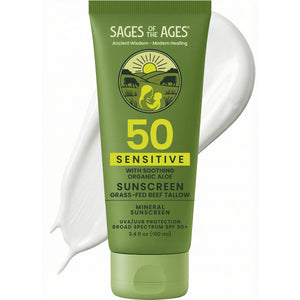
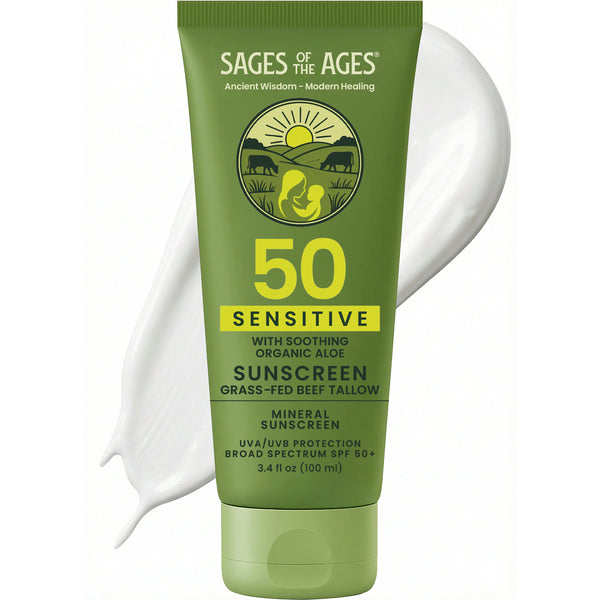
Pairing non-nano zinc with a grass-fed tallow base can make a sunscreen more emollient and pleasant to wear, and tallow's natural vitamins are a reasonable bonus. To be clear, though: the SPF protection comes from the zinc, applied generously and reapplied. The tallow base improves how it feels; it doesn't boost the SPF.
The Bottom Line
If you want a non-nano zinc, tallow-based option, ours is built on the principles above: see our Mineral Sunscreen SPF 50, or the Family Sun Kit for the whole family. But the highest-value habit isn't which bottle you buy. It's applying enough, reapplying, and never skipping.